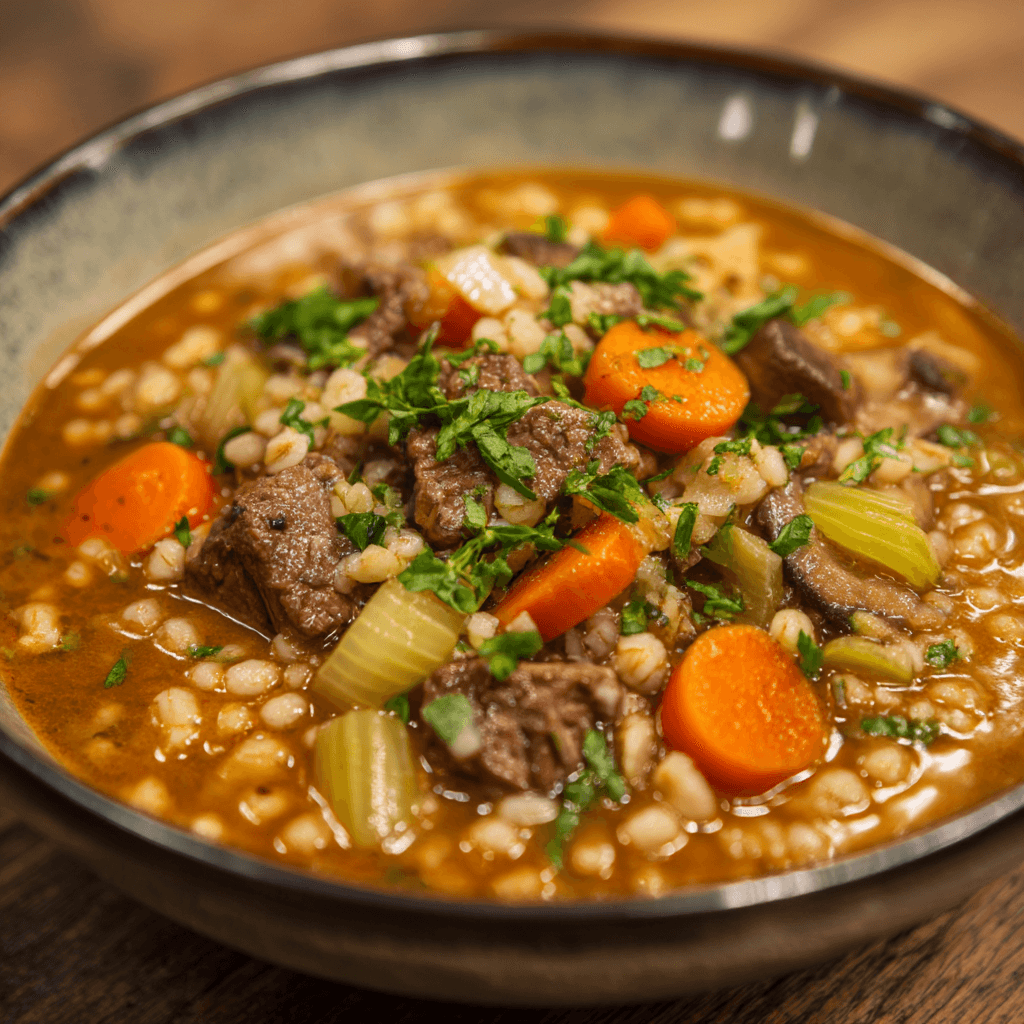
Unlocking Bistro Excellence: Gordon Ramsay's Secrets for Restaurant-Quality Beef Barley Soup
There's a reason why some dishes, seemingly simple, transcend the ordinary when prepared by a master chef. Beef barley soup is a prime example. While many home cooks can whip up a hearty pot, achieving that soul-satisfying, complex flavor and perfect texture found in a high-end bistro often feels out of reach. But what if you could unlock the secrets to transform your homemade beef barley soup into something truly extraordinary? We're diving deep into the culinary philosophy often associated with Chef Gordon Ramsay – an approach that prioritizes precision, technique, and ruthless attention to flavor building.
Forget the "dump and simmer" method. Ramsay's culinary ethos, even when applied to a comforting classic like beef barley soup, is about intentional layering of flavors, ensuring every ingredient plays its part perfectly. It’s about more than just combining ingredients; it’s about mastering the process, from the first sizzle of the beef to the final sprinkle of fresh herbs. Once you experience this level of flavor, you might just find, like many avid home cooks, that you’ll never order Cozy & Chewy: Your Family's Favorite Beef Barley Soup Recipe from a restaurant again – because yours will be better.
The Foundation of Flavor: Why Most Beef Barley Soups Fall Short
The journey to an exceptional beef barley soup begins with understanding where many go wrong. It’s easy to throw beef, vegetables, and broth into a pot and call it a day. The result, however, often lacks depth, the meat can be grey and bland, and the barley might turn into an unappetious mush. This "lazy version," as some chefs might call it, misses crucial steps that build the very backbone of flavor.
Ramsay's approach, and indeed the method employed by top chefs, focuses on fundamental techniques:
- Searing the Beef Properly: This isn't just about browning; it's about the Maillard reaction, a chemical process that creates rich, complex flavors and a beautiful crust on your meat. Skipping this step leads to steamed, grey beef that contributes little to the soup's overall taste.
- Reducing Wine, Not Just Adding It: Wine in soup isn't just liquid; it's a flavor enhancer and a deglazing agent. Proper reduction concentrates its flavors, removing the harsh alcohol notes and leaving behind a rich, aromatic foundation.
- Timing the Barley Right: Barley, a wonderfully chewy whole grain, can easily become overcooked and mushy if added too early or cooked for too long. Its texture is key to the overall experience of a great beef barley soup.
- Strategic Ingredient Choices: Beyond the basics, certain ingredients act as "secret handshakes" to deepen flavor – think Worcestershire sauce for umami or fresh thyme for aromatic punch.
Ignoring these steps leads to a soup that, while edible, lacks the vibrancy and depth of a truly great dish. It's the difference between sustenance and an experience.
Essential Ingredients for Your Bistro-Quality Beef Barley Soup
While the technique is paramount, the quality and type of your ingredients are equally crucial. A chef's kitchen doesn't compromise on what goes into the pot. Here’s a breakdown of the ingredients that truly matter for your From Bland to Bistro: Elevate Your Beef Barley Soup with Pro Tips:
- Beef Chuck (2 lbs / 908g): This is your workhorse. High in collagen, chuck meat breaks down beautifully during a long simmer, becoming fork-tender and incredibly flavorful. Avoid lean stew meat, which can dry out and lack the richness. Patting it dry before searing is a non-negotiable step for that perfect crust.
- Olive Oil (3 tbsp): Used for searing. A good quality olive oil can withstand the heat needed for browning without smoking excessively.
- Mirepoix (Onion, Celery, Carrots): The aromatic backbone of many great soups. Cut these vegetables evenly so they cook at the same rate, releasing their sweet and earthy flavors uniformly.
- Garlic (3 cloves): Minced fine, garlic adds a pungent, aromatic warmth. Add it at the end of sautéing your mirepoix to prevent burning.
- Dry Red Wine (¾ cup / 180ml): A dry red like Merlot or Cabernet Sauvignon is ideal. The tannins and acidity help to deglaze the pan and contribute a beautiful depth of flavor. Steer clear of anything sweet.
- Low-Sodium Beef Broth (6 cups / 1.5L): Opt for low-sodium so you can control the seasoning yourself. While homemade broth is always superior, a good quality boxed broth will suffice.
- Worcestershire Sauce (1 tbsp / 15g): This is one of those "secret" ingredients. Its complex profile – a blend of savory, sweet, and tangy notes – provides a profound umami depth that elevates the entire soup.
- Fresh Thyme (3 sprigs): Fresh herbs make a significant difference. Thyme offers an earthy, peppery, and slightly minty aroma that dried thyme simply can't replicate with the same punch.
- Pearled Barley (1 cup / 200g): The star grain. Pearled barley offers a delightful chewiness and nutty flavor. Do not substitute quick-cooking barley, which will disintegrate and lose its textural appeal.
- Salt & Pepper: Seasoning as you go is critical. Layers of seasoning build overall flavor, rather than trying to fix blandness at the end.
- Italian Parsley (¼ cup, minced): For freshness and a vibrant green garnish, added right before serving.
Mastering the Method: A Chef's Approach to Beef Barley Soup
Now for the heart of it – the technique. Each step is a building block, contributing to the final masterpiece of flavor in your beef barley soup:
- Sear the Beef with Purpose:
- Begin with a heavy-bottomed pot, ideally a Dutch oven or enamel pot, heated over medium-high heat. Add olive oil.
- The Key: Pat your beef chuck thoroughly dry with paper towels. Moisture inhibits browning.
- Season the beef generously with salt and freshly ground black pepper.
- Sear the beef in batches. Do not overcrowd the pan; this lowers the temperature and steams the meat instead of searing it. Give each piece space to develop a deep, golden-brown crust. Let the Maillard reaction work its magic – resist the urge to move the meat too soon. Once a beautiful crust forms, flip and sear other sides.
- Remove the browned beef and set aside.
- Sauté the Aromatics:
- In the same pot, with all those delicious browned bits (fond) stuck to the bottom, add your diced onion, celery, and carrots.
- Stir and scrape the bottom of the pot, allowing the vegetables to pick up the fond, enriching their flavor. Sauté for 5-6 minutes until they begin to soften.
- Add the minced garlic and cook for just one minute until fragrant. Garlic burns quickly, so add it last.
- Deglaze with Wine and Reduce:
- Crank up the heat to medium-high. Pour in the dry red wine.
- Immediately use a wooden spoon to scrape every caramelized bit off the bottom of the pot. This is flavor gold!
- Let the wine reduce by half. This step is crucial; it concentrates the wine’s flavor and cooks off the harsh alcohol, leaving a rich, complex aroma.
- Build the Broth and Simmer:
- Return the seared beef to the pot.
- Pour in the low-sodium beef broth, add the Worcestershire sauce, and tuck in the fresh thyme sprigs.
- Bring the mixture to a boil, then immediately reduce the heat to a gentle simmer. Cover the pot and let it cook for 1.5 to 2 hours, or until the beef is incredibly tender and easily pulls apart with a fork.
- Introduce the Barley:
- Once the beef is tender, stir in the pearled barley.
- Continue to simmer, uncovered, for another 30-40 minutes, or until the barley is cooked through but still pleasantly chewy. Keep an eye on the liquid level; add a little more broth or water if it gets too thick.
- The Finishing Touches:
- Taste and adjust seasoning. This is where you fine-tune the salt and pepper.
- Remove the thyme sprigs.
- Stir in the fresh minced Italian parsley just before serving for a burst of freshness and color.
Elevating Your Beef Barley Soup Further: Pro Tips from the Pros
Beyond the core techniques, a few extra considerations can push your beef barley soup from great to absolutely unforgettable:
- Rest the Beef Before Searing: If possible, take your beef out of the fridge about 30 minutes before you plan to sear it. This allows it to come closer to room temperature, ensuring more even cooking and better browning.
- Homemade Broth Advantage: While store-bought broth works, making your own beef broth from scratch will undoubtedly deliver a soup with unparalleled depth and richness. It’s an investment in flavor that pays off tenfold.
- The Power of Patience: Don't rush any step, especially the searing and simmering. Good food takes time, and the slow development of flavors is what transforms simple ingredients into something extraordinary.
- A Touch of Acidity: A tiny splash of red wine vinegar or a squeeze of lemon juice at the very end can brighten all the flavors in the soup without making it taste sour. It's a subtle professional trick.
- Make Ahead Magic: Like many hearty stews and soups, beef barley soup often tastes even better the next day as the flavors meld and deepen. It’s a perfect make-ahead meal for chilly evenings.
The journey to restaurant-quality beef barley soup isn't about exotic ingredients or complicated machinery. It's about respecting each component and applying fundamental culinary techniques with precision and patience. By embracing this "chef-like" approach, focusing on proper searing, thoughtful deglazing, and precise timing, you’ll create a soup that's not just nourishing, but truly a triumph of flavor and texture – a dish worthy of any Gordon Ramsay-approved kitchen.
